

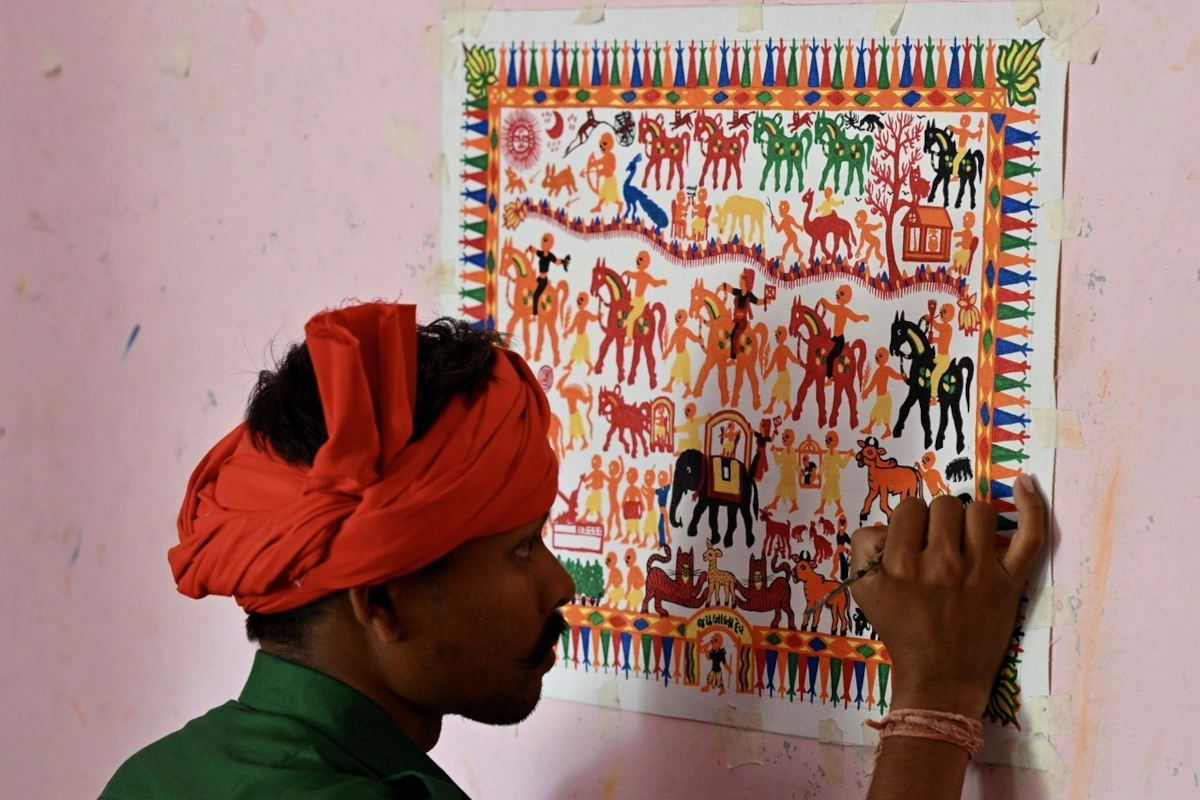
Art and craft: meeting the masters of India’s living heritage
In India, art is rarely confined to the sterile walls of a gallery; instead, it is a living, breathing part of the landscape. It is found in the vibrant Chikankari embroidery of a Lucknowi tunic, the sacred Pithora murals on a tribal hut in Gujarat, and the intricate frescoes of Rajasthan’s “open-air art gallery” in Shekhawati. At Bharatvaas Travels, we believe that to truly understand the soul of the subcontinent, one must sit in the quiet courtyards of the artisans who have passed their skills from generation to generation for hundreds of years
By choosing the path of slow travel, we move away from commercial emporiums to visit remote craft villages where time-honoured techniques remain a way of life. Imagine witnessing the rhythmic clack of a village loom in Patan, where master weavers still guard the 1,000-year-old secret of double ikat Patola silk, or learning the delicate precision of miniature painting in Kishangarh. These encounters offer more than just a souvenir; they provide a transformative insight into the history, symbolism, and spiritual daily meaning of Indian culture
Nice to learn: the heartbeat of rural craft In rural India, craftsmanship is often a communal language. Entire villages often specialise in a single art form—such as the terracotta potters of Poshina or the block printers of Dhamarka—meaning the village itself becomes a workshop. You might notice that many traditional dyes are still derived directly from the soil and seasons: deep indigos from fermented plants, vibrant reds from madder root, and ochres from the earth itself. This connection to nature is why many tribal arts, like the Rathwa community’s Pithora paintings, are created as rituals to invite protection and prosperity into the home.
In an age of mass production, these legacies are under threat. At Bharatvaas Travels, we are committed to supporting these local families directly. By bringing you into their ateliers for hands-on workshops, we help make this extraordinary craftsmanship visible to an international audience, ensuring that ancient knowledge survives for the generations yet to come.